Contaminated water
Sewage Cleanup in Oyster Bay, NY
Sewage cleanup in the Town of Oyster Bay is not a wetter version of a water job. The water carries pathogens, so the work is decided by what is in it rather than by how much of it there is, and the parts of the room it soaked into usually leave the building.
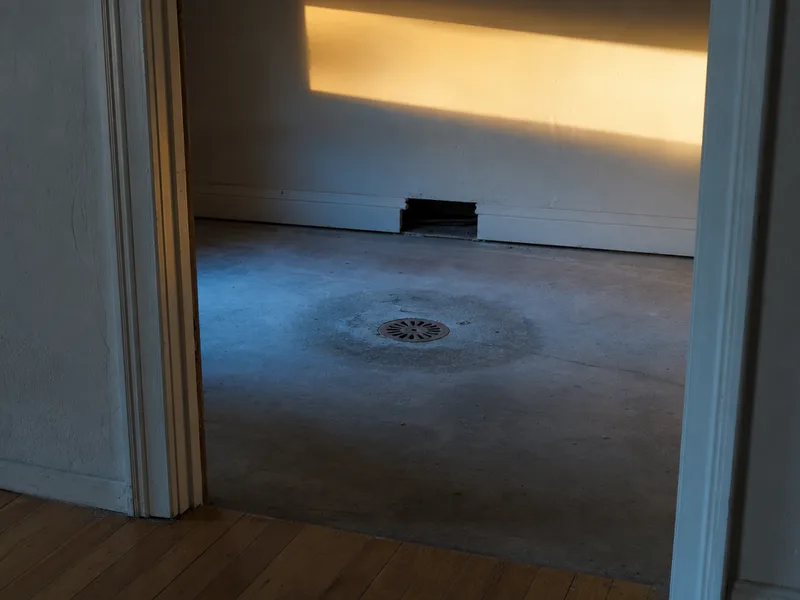
Before anyone touches it
Published health guidance. Nothing here is a claim about how fast anybody turns up.
-
Stop using every drain in the house
A backup means water is coming back the wrong way. Running a tap, a shower or a washing machine anywhere in the house adds to what is already on the floor, and a second load is often what takes it past a doorway.
-
Keep people and pets out of the room
EPA's guidance for a backup from plumbing fixtures or an on-site system is to avoid contact with the sewage, because it may contain harmful pathogens (EPA, checked 2026-08-31). Shoes carry it into the rest of the house.
-
Do not touch anything electrical that got wet
Federal guidance is to leave wet electrical equipment alone and to turn the power off only if it is safe to do so (FEMA, Ready.gov, checked 2026-08-31). Standing water and a floor outlet are a worse combination than the sewage.
-
Photograph it from the doorway
Wide shots that show how far it reached, and a close shot of the fixture it came back through. You do not need to go in to get either of them.
-
Write down what came back first
The lowest fixture in the house usually goes first, and which one it was narrows the cause considerably. A basement floor drain says something different from a first-floor toilet.
Category 3 water is never a do-it-yourself job. EPA is explicit that damage caused by sewage or other contaminated water needs a professional experienced with contaminated water (EPA, checked 2026-08-31), and its own cleanup guidance for a backed-up on-site system assumes protective clothing including long rubber gloves and face splash shields. The five steps above are about keeping the situation from getting worse. They are not the first five steps of a cleanup you finish yourself.
Sewage cleanup in Oyster Bay, NY is the one water job where the first decision is not about equipment. It is about whether anybody should be in the room.
Water that came back up through a floor drain, a toilet or a basement fixture is not the same substance as water from a burst supply line, even when the two look identical on a tiled floor. The restoration trade separates them by category, and the category, not the depth, is what decides how the work runs.
What is category 3 water, and why the label matters
Category 1 is clean water arriving straight from a supply line. Category 2 has picked something up on the way, from a washing machine or a dishwasher, say. Category 3 is grossly contaminated: sewage, a failed on-site system, or water that has run across open ground before it got inside.
The practical difference is what happens to the materials. Clean water is a drying problem, and most of what got wet stays in the house. Contaminated water is a removal problem first, because porous material holds what was in the water inside itself rather than on the surface where it can be wiped off.
EPA states the boundary plainly. Where water or mold damage was caused by sewage or other contaminated water, its published guidance is to call in a professional with experience of contaminated water rather than treat it as a homeowner cleanup (EPA, checked 2026-08-31).
What sewage backup cleanup actually involves
- The source is found and stopped. Until it is, everything downstream is temporary. This part is usually a plumber and it is usually the first call.
- Contaminated material comes out. Carpet and pad, particleboard, insulation and the lower band of drywall are the usual list. Where the water sat against a wall the cut line goes above the visible mark, because material wicks upward and the wet part is taller than the stain.
- Hard surfaces are cleaned and disinfected. EPA's own guidance for a backed-up on-site system describes disinfecting exposed items and areas with a mixture of 90 percent water and 10 percent household bleach, and cleanup personnel wearing protective clothing such as long rubber gloves and face splash shields (EPA, checked 2026-08-31).
- The room dries, and then it is checked. The same source advises that the area is not used again until it has been completely dry for at least 24 hours (EPA, checked 2026-08-31). Under a slab or behind a closed wall that takes considerably longer than a surface does.
Why this Town gets its own answer
A sewage backup is usually described as a public sewer problem. In much of the Town of Oyster Bay it is not, and the Town's own paperwork is the tell.
The Town's published list of projects that generally require a building permit puts "sewers, drywells and cesspools" together as a single category (Town of Oyster Bay, checked 2026-08-31). A municipality that still permits cesspools as a routine category of work is a municipality where a large number of houses are handling their own wastewater on their own lot. When one of those backs up, there is no main to call about. The failure is on the property.
That changes the diagnosis and it changes who fixes it. EPA lists the signs of a failing on-site system as water and sewage backing up into the plumbing, very slow drains, gurgling, standing water or damp spots near the tank or drainfield, odors, and bright green spongy grass over the drainfield even in dry weather (EPA, checked 2026-08-31). Most of those show up weeks before the backup does.
The other half of the split is geography. On the south side of the Town the ground is a flat outwash plain with the water table close under it, and EPA notes that soil-based systems installed where there is a high ground water table can fail hydraulically, meaning the ground simply cannot take what the system is putting into it (EPA, checked 2026-08-31). That is why a wet spring can produce a backup in a house where nothing has changed indoors at all.
Why contaminated water becomes a mold job if it is left
The link between this page and the next one is the contamination category itself, not a vague sense that one thing follows another.
Category 3 water leaves organic material in porous surfaces. If those surfaces are dried but not removed, the material stays. If they are neither removed nor properly dried, the room now has a food source and moisture in the same place, which is the condition mold remediation in Oyster Bay exists to deal with. That is also why the cut line in a contaminated room is drawn higher than it would be after a clean-water loss: the standard is not "how far up is it wet" but "how far up did the contaminated water reach".
Where the water came in from outside during a storm rather than back up from a fixture, the lane is different again and starts with the building envelope. That work sits on storm damage restoration.
What we do, and what we do not
We connect Town of Oyster Bay homeowners with local restoration contractors. Tell us what happened and the details go to one of them.
We do not do the cleanup ourselves, we do not quote it from a form, and we do not touch insurance. Explaining how a claim is generally framed is fine and how a New York water damage claim is framed does exactly that. Handling one is a licensed activity in this state and it is not something this site offers.
If the water in your house was clean rather than contaminated, the work is different and cheaper, and flooded basement cleanup is the page for it. The full list is on the restoration services page, and the Town-wide picture is on water damage restoration across the Town of Oyster Bay.
Hicksville and Massapequa are the two hamlets where this comes up most, and both have their own page: Hicksville and Massapequa.
Why the cause is usually on your own lot
The Town of Oyster Bay still lists "sewers, drywells and cesspools" together as one category of permitted work, which is why a backup in this Town is as often the property's own on-site system failing as anything in a public line.
Town of Oyster Bay, Building Division, checked 2026-08-31
Questions people ask about a sewage backup
What is category 3 water?
It is the restoration trade's label for grossly contaminated water: sewage, a backed-up on-site system, and floodwater that has run across ground. Category 1 is clean water straight from a supply line and category 2 is water that has picked something up on the way. The number is not about volume. It is about what is living in it, and it decides whether material is dried or removed.
Will plumbers clean up sewage?
A plumber finds and fixes the cause, which is the part that has to happen first or the room fills again. Most do not do the cleanup, the removal of contaminated material or the drying that follows, and the two trades usually work in sequence rather than instead of each other.
How much does it cost to clean up sewage?
What moves it is the floor area affected, whether the water reached porous material such as carpet, drywall or cabinetry, and how much of the room has to come out rather than be cleaned. A quote made from a description alone is a guess; photographs of the spread and the fixture are what let somebody be specific.
Can carpet or drywall be saved after a sewage backup?
Usually not. Porous materials hold contaminated water inside the material rather than on its surface, which is why the standard answer is removal and not cleaning. Hard surfaces such as concrete, tile and sealed masonry are a different case and are normally cleaned, disinfected and dried in place.
What happens after the room is cleaned?
It has to dry, and then it has to be checked. EPA advises that a disinfected area is not used again until it has been completely dry for at least 24 hours (EPA, checked 2026-08-31), and materials behind a wall take longer than that. If drying is cut short, the next call is usually about mold remediation in Oyster Bay, and how long before mold grows after water damage explains how short the window is.
How do I stop it happening again?
That depends what failed. An on-site system that backs up has usually been told you something first, and EPA lists slow drains, gurgling plumbing, damp ground or bright green grass over the tank, and odors near the drainfield as the warning signs (EPA, checked 2026-08-31). A backflow valve is the other common answer where the cause is outside the house.
The page most people need after this one
- Mold Remediation
Growth found, contained, removed, and the moisture behind it fixed.
Close the door on it and tell us what happened
Which fixture backed up, how far it spread, and whether anybody in the house has a health condition are the three details that change how this job is planned.