A village, not a hamlet
Water Damage Restoration in Bayville
Bayville sits out on the neck at the north edge of the Town, with the Sound on one side and the harbour on the other. It is also the only place covered here that the Town lists as an incorporated village rather than as one of its unincorporated areas, and that turns out to matter later in a job rather than earlier: not while anything is being dried, but once somebody starts putting the room back.
How each shore got the shape it has
How did each shore get its shape?
North shore · your shore
Streams cut the harbours
The many wide and deep harbours along this shore were carved by northward flowing streams, and the sea steepened the headlands left between them. It is a coast of edges rather than margins.
USGS, New York Water Science Center, Long Island Topography · checked 2026-08-31
South shore
Meltwater laid the plain
The other end of the Town was built up rather than cut down: meltwater streams spread sorted sand and gravel southward into a plain, and barrier beaches closed off shallow bays in front of it.
USGS, New York Water Science Center, Long Island Topography · checked 2026-08-31
What the Town publishes about this particular place
Bayville is the only one of the five places covered on this site that the Town of Oyster Bay lists among its incorporated villages; Hicksville, Syosset, Massapequa and Glen Head all appear on the Town's list of unincorporated areas, which is why the question of whose rules apply to putting a room back is not the same question here as it is a few miles inland.
Town of Oyster Bay, Incorporated Villages and Unincorporated Areas, checked 2026-08-31
Bayville sits out on the neck at the north edge of the Town, with the Sound on one side and the harbour on the other. It is also the only place covered on this site that the Town lists as an incorporated village rather than as one of its unincorporated areas. That distinction has nothing to do with how a building dries and quite a lot to do with what happens after, which is a strange thing to put near the top of a page and it is the honest place for it.
What causes most water losses in Bayville
Most of the work here has nothing to do with the coast, and it would be a strange kind of flattery to pretend otherwise. Interior plumbing accounts for the bulk of it, in a village on a peninsula exactly as it does four miles inland, and water damage restoration Oyster Bay covers how that runs.
The local addition is weather arriving from more than one direction. USGS notes that sand and silt, as well as organic deposits, tend to fill the shallow bays behind the barrier beaches (USGS, checked 2026-08-31), and the north shore is the other kind of coast entirely: cut rather than filled, with harbours carved deep between headlands. A house on a narrow neck between two bodies of water gets weather off both, and wind-driven rain testing an envelope from an unusual angle is a more common opening move here than a slow interior leak.
That matters for diagnosis. Water arriving through a wall at height behaves nothing like water arriving at floor level, and the two get described identically over the phone.
A village rather than a hamlet, and why that shows up late in a job
The Town of Oyster Bay lists Bayville among its incorporated villages, and lists Hicksville, Syosset, Massapequa and Glen Head among its unincorporated areas (Town of Oyster Bay, checked 2026-08-31). A village is its own municipality. The unincorporated parts of the Town are not.
For the emergency half of a water loss this changes nothing at all. Extraction, removal and drying are the same work with the same equipment on the same timescale, and nobody needs permission to dry a building.
For the rebuild half it is a real question, and the useful thing to know is that it is a question rather than the answer to it. Whose rules apply to putting a room back is simply not the same enquiry in a village as in an unincorporated hamlet, and it is worth raising at the start rather than discovering it when somebody is ready to start work. This page deliberately does not tell you what those rules are: that is between a homeowner, whoever is doing the rebuild, and the village itself.
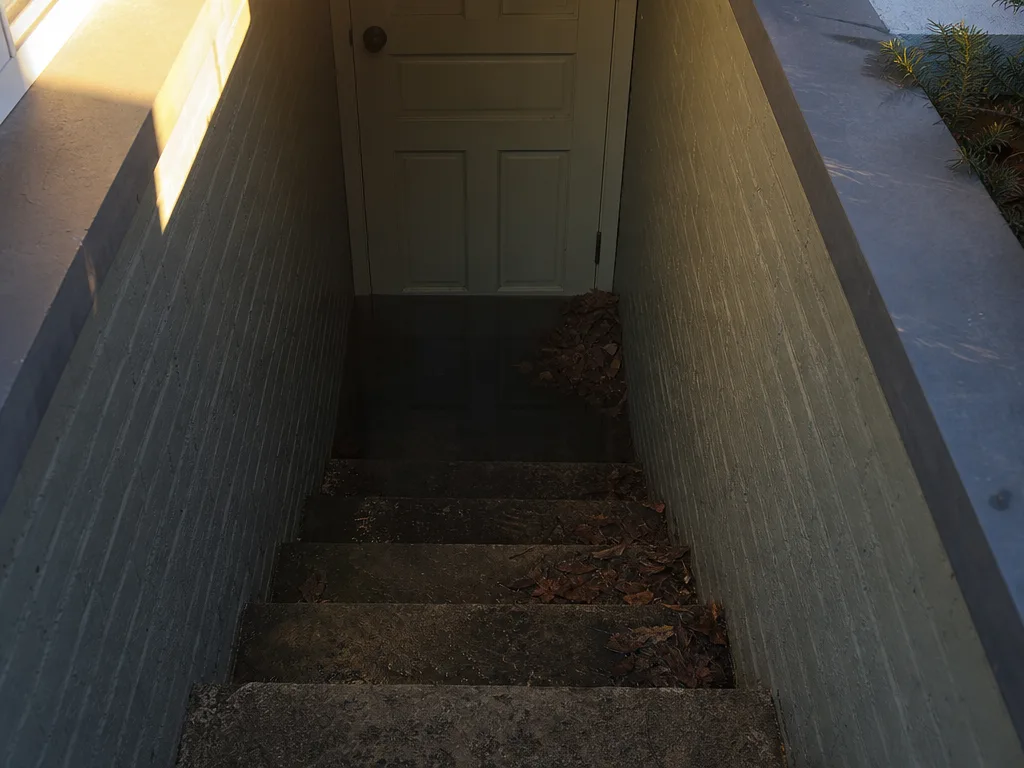
Flooded basement cleanup in Bayville, and what it involves
Flooded basement cleanup has the sequence, and the sequence is not what is different here. What is different is that a job on this side of the Town more often has two endings rather than one.
The first ending is the building being dry, and that is a measurable state reached by equipment on a schedule. The second is the room being finished, and that is a construction question with a different set of people in it.
Everywhere else on this site those two run together and nobody notices the seam. Here it is worth planning for, because the second half answers to a municipality the first half never has to speak to.
One other thing narrows the choice early. Where the water was not clean the handling requirements change immediately: EPA advises calling in a professional experienced with contaminated water when the water or mold damage was caused by sewage or other contaminated water (EPA, checked 2026-08-31). Sewage cleanup sets out what that involves. It is worth establishing which category you are in on day one, because it decides how much of the room survives to reach the second ending at all.
Drying is the same everywhere, and the rebuild is not
Splitting a water loss into those two halves is the most useful thing a homeowner here can do, because they run on different clocks and answer to different people.
Drying is finite and measured. It starts as soon as somebody can get equipment into the room, and it ends when the readings say it has, which is a fact rather than an opinion. None of that changes between one end of the Town and the other.
The rebuild is a scheduling problem instead of a technical one, and here it involves a municipality that the four other places on this site do not have. Booking it as its own piece of work while the drying is still running is what keeps the gap between the two from stretching.
Figures live in one place on this site: what a flooded basement cleanup costs. This page quotes none, because what a job comes to depends on how much material was in contact with water and for how long, and neither of those is answerable over the phone.
Tell us what happened in Bayville
What is wet, how long it has been wet, and whether anything needs rebuilding afterwards. That last one is the part worth flagging early here.
Get a quoteServing the Town of Oyster Bay, NY
Questions Bayville homeowners ask
What causes most water losses in Bayville?
Nothing exotic, which is worth saying because a waterfront address invites the opposite assumption. Pipes and appliances cause most of it. The one genuinely local pattern is weather arriving off two different bodies of water, so an envelope that has never leaked in a westerly can find a way to leak in a northeaster, and the entry point is often high on the building rather than at floor level.
Is Bayville a village or a hamlet, and does it change anything?
A village. The Town of Oyster Bay lists Bayville among its incorporated villages, and lists Hicksville, Syosset, Massapequa and Glen Head among its unincorporated areas (Town of Oyster Bay, checked 2026-08-31). It makes no difference to drying a building. It can make a difference to whose rules apply once you start rebuilding, so it is worth asking about early rather than at the point somebody wants to start work.
Does being near the water mean my basement is at more risk?
That is not a question this page can answer honestly for a particular address, and any contractor who answers it confidently is guessing. What is true generally is that proximity changes which mechanisms are plausible rather than assigning a risk level: wind-driven rain and salt exposure become more relevant, and how a specific lot is graded matters more than how close it is to a shoreline. Look your own address up on FEMA's Flood Map Service Center.
What happens between drying the room and rebuilding it?
A gap that catches people out. Drying finishes when meter readings settle, and rebuilding cannot start until then, so there is a stretch with an open room and nothing visibly happening. It is the right time to sort out who is doing the rebuild and what approvals it needs, because that work runs to a different calendar from the drying and starting it late is what stretches a three week job into three months.
The rest of the Town, working south
- Glen Head
Falling ground, where water arrives at a house instead of rising to it.
- Syosset
Mixed ground that drains unevenly, and the wet corner that comes with it.
- Hicksville
Flat ground and permeable sand, where water leaves downward or does not leave at all.
The four kinds of work
Water in a Bayville house?
Describe the wet part first and the rebuild second. Drying is the same everywhere; what comes after it is the part that is local.