Insurance
Does Homeowners Insurance Cover Water Damage in New York?
Usually it depends on one word, and the word is flood. It has a published definition that decides which policy your loss belongs to, and most of the confusion around water damage claims comes from nobody having read it.
Published August 31, 2026 By Oyster Bay Water Damage
The definitions the answer turns on
Two or more acres
The NFIP describes a flood as two or more acres of normally dry land, or two or more properties, partially or completely submerged by water from one of a listed set of causes.
FEMA and the National Flood Insurance Program, What Is a Flood, checked 2026-08-31A licensed activity
In New York a person must generally hold a public adjuster licence to negotiate or effectuate the settlement of a property claim on behalf of an insured, for compensation.
New York State Department of Financial Services, OGC Opinion 11-08-03, checked 2026-08-31Not a rebuild
Federal disaster assistance is published as something designed to kick-start recovery rather than to restore damaged property or replace what was lost.
FEMA and the National Flood Insurance Program, The Cost of Flooding, checked 2026-08-31Most people asking this question have a wet floor and a policy document they have never read past the first page. The short answer is that a standard homeowners policy in New York generally covers water damage that is sudden and accidental, and generally does not cover water that arrived from outside the building at ground level. Almost everything else is detail about which of those two things happened.
That sounds simple and is not, because the word separating them carries a technical definition that has very little to do with how the word is used in conversation.
The word the whole answer turns on
In ordinary speech a flooded basement is a basement with water in it. In insurance it is narrower than that, and the definition is published.
The National Flood Insurance Program describes a flood as two or more acres of normally dry land, or two or more properties, partially or completely submerged by water from a listed set of causes: inland or tidal water overflowing, unusual and rapid surface run-off, mudflow caused by flooding, or land along a body of water collapsing because of waves or currents (FEMA, checked 2026-08-31).
Read that carefully and two things follow.
The first is that a flood is an event affecting an area rather than a house. If water came up through your slab and through nobody else's, and nothing overflowed, you may have a wet basement that is not a flood in this sense at all.
The second is that the definition has nothing to say about how much water there is or how much damage it did. A quarter inch across a finished basement can meet it. A foot of water from a burst pipe never will, because a pipe is not on the list.
That is why two people with similar-looking damage get different answers, and why the answer often surprises the one with more water in the house.
What a standard policy is generally written around
The case a homeowners policy is built for is a sudden and accidental discharge from inside the building. A supply line to a washing machine that let go. A hot water tank at the end of its life. A pipe that froze in an uninsulated wall and split when it thawed. These are events with a moment attached to them, and that moment is what makes them straightforward.
The common exception inside that category is the slow leak. Water that has been escaping behind a cabinet for eight months usually gets treated as a maintenance problem rather than as an event, on the reasoning that it was there to be found. This is the single most frequent unpleasant surprise in water claims, and it is also the reason the damage often looks worse than the leak: by the time anyone notices, the material has been wet for most of a year.
Sitting outside the policy altogether, in most standard forms, is water that arrived from outside at ground level. FEMA states plainly that most homeowners insurance does not cover flooding, and that federal disaster assistance is not guaranteed and is in any case designed to kick-start recovery rather than to restore damaged property or replace what was lost (FEMA, checked 2026-08-31). That second half is worth sitting with, because a lot of people assume there is a federal backstop that will make them whole, and the agency running the programme says otherwise in its own words.
Sewer and drain backups are their own category again, and are frequently an optional endorsement rather than something a policy includes by default. Whether you have it is a specific question with a specific answer, and it is much better asked on an ordinary Tuesday than on the day it matters.
What the claim process actually asks of you
If you do have flood cover and you are using it, the published guidance is to report the flood and the loss to your insurance provider as soon as possible, and that the insurer's adjuster will then prepare a damage estimate for you to review (FEMA, checked 2026-08-31).
The phrase worth noticing there is "for your review". The estimate is produced by somebody working for the insurer, and the process expects the policyholder to read it carefully and check that it is accurate and complete. That is a real task, and it lands on the person least equipped to do it, usually in the same week they are dealing with the damage itself.
Before any of that, there is one thing that helps every version of this and costs nothing: document the damage before anybody starts cleaning it up. The evidence for a water claim is destroyed by the correct response to water. Once the carpet is out and the room is drying, what is left is a tidy room and a description. Photographs, from more than one angle, with something in the frame giving a sense of depth, taken before anything moves.
Who is allowed to handle a claim in New York, and who is not
This is the part of the subject where the answer stops being general advice and becomes a rule with a penalty attached.
New York's Department of Financial Services has published its position: a person generally must be licensed as a public adjuster if, for compensation, they negotiate or effectuate the settlement of a claim for loss or damage to an insured's property on behalf of the insured. Acting as one without a licence is a misdemeanour, and separately carries a penalty of up to $500 for each transaction (New York State Department of Financial Services, checked 2026-08-31).
A public adjuster is a licensed professional a homeowner can hire to represent them in a claim, and they are a legitimate part of this landscape. Several of them rank for this exact search, which is how a lot of people first hear the term.
What matters for reading anything on the internet about your claim is the distinction the rule draws. Explaining how claims generally work is not adjusting. Negotiating your settlement for you, for money, is, and a restoration contractor who offers to do it is describing licensed activity.
So the line this site keeps is a simple one. We connect homeowners with local restoration contractors who do the drying and the repairs. We do not deal with your insurer, we do not prepare or negotiate an estimate on your behalf, and nothing on this site is legal advice or a reading of your policy. If you want somebody in your corner on the claim itself, the person you are looking for is a licensed public adjuster or an attorney, and that is a separate hire from the one who dries the building.
Why the answer to this question is so often local
There is a version of this that is specific to the Town of Oyster Bay, and it follows from the ground rather than from the paperwork.
The northern half of the Town runs down to the Sound in slopes and harbours. Water there tends to arrive at a building from uphill, quickly, during weather. Where that gets into a basement it is surface run-off, which is on the flood definition's list, and the claim is likely to be a flood claim rather than a homeowners one.
The southern half is flat, with the water table close beneath it. Water there rises rather than runs, and it can come up through a slab on a day when nothing overflowed anywhere. That is the case most likely to fall in the gap: not a plumbing failure, so probably not a standard-policy loss, and possibly not meeting the two-acre or two-property test either.
The practical consequence is that the same phrase, a flooded basement, points at two different policies depending on which side of the Town you are standing. What the work involves either way is on flooded basement cleanup, and where weather opened the building up rather than water rising into it, storm damage restoration is the closer description.
One last thing worth knowing regardless of how the coverage question lands. The drying clock does not wait for the claim to be resolved, and how long before mold grows after water damage covers what that window does and does not promise. Documenting the damage properly and then drying the building are not in conflict, and doing the second one late is expensive in a way no policy reimburses.
Questions people ask
Does homeowners insurance cover water damage from rain?
Rain that gets in through something that failed, such as a roof opened up by a storm, is generally treated differently from rain that collects on the ground and comes in at the bottom of the building. The second one is where the flood definition starts to apply, and where a standard policy usually stops.
Does it cover a burst pipe or a failed appliance?
Sudden and accidental discharge from plumbing or an appliance is the case most standard policies are actually written around, which is why a burst supply line is often the most straightforward water claim there is. Slow leaks that went on for months are the common exception, because insurers tend to treat those as maintenance rather than as an event.
Will homeowners insurance cover a flooded basement?
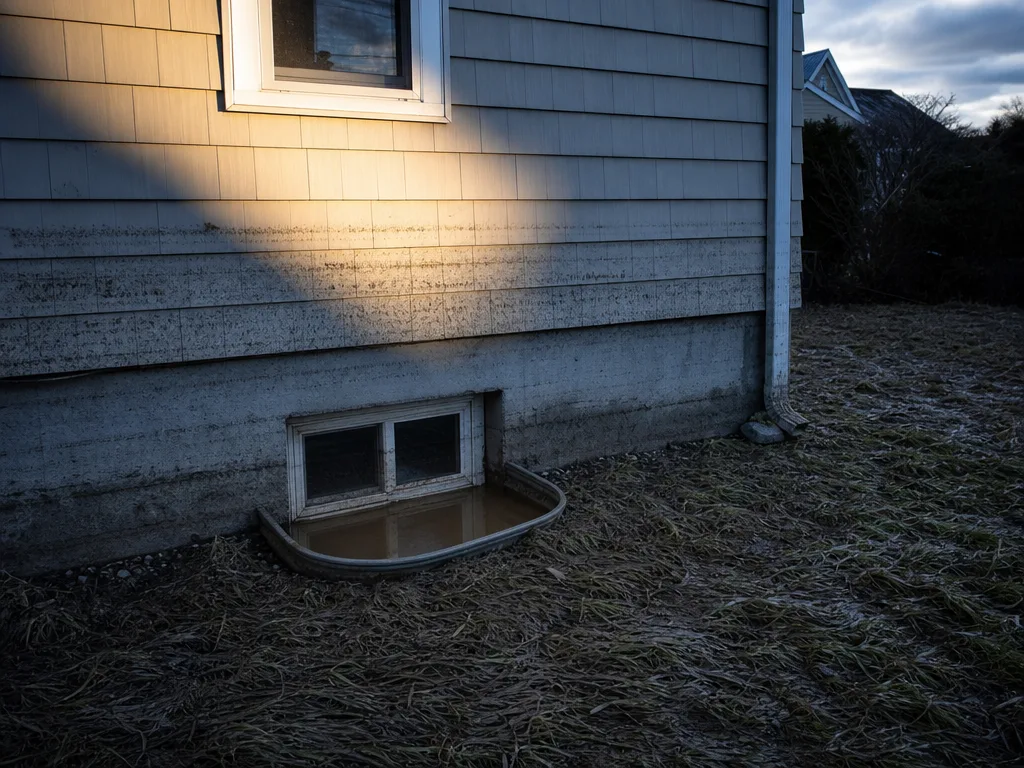
It turns on where the water came from rather than on the fact that the basement is wet. A failed pipe or a hot water tank that let go is a plumbing event. Groundwater rising through a slab, or surface water arriving from outside, is the case a standard policy generally excludes and that flood insurance exists to cover.
What about a sewer or drain backup?
A backup is usually its own category and is often an optional endorsement rather than something included by default, which is why two neighbours with similar policies can get different answers. It is worth checking before you need it rather than after.
Should I file a claim for water damage?
That is a judgement about your own deductible, your claims history and the size of the loss, and it is your insurer or broker who can answer it properly. What is worth doing straight away either way is documenting the damage, because that evidence disappears as soon as anybody starts drying the room out.
Can you handle the claim for us?
No, and it is not a matter of preference. In New York, negotiating or settling a property claim on a policyholder's behalf for compensation generally requires a public adjuster licence, and doing it without one is a misdemeanour that also carries a penalty of up to $500 for each transaction (New York State Department of Financial Services, checked 2026-08-31). We connect you with a contractor to do the restoration work. The claim stays between you, your insurer and anyone you license to act for you.
You have water damage and a policy question
Only the first half of that is ours. Describe what happened and a local restoration contractor gets in touch about the drying and the repairs. The coverage half belongs to your insurer or your broker, and this site stays out of it deliberately rather than modestly.
Get a quoteServing the Town of Oyster Bay, NY
The work this guide is about
- Flooded Basement Cleanup
Water out, then the structure dried and checked.
- Sewage Cleanup
Contaminated water, removed and the room made safe again.
- All restoration services
Where these statements come from
Nothing below is a reading of your policy, which is the only document that decides your claim. These are the published rules that sit behind the general shape, with the date each one was read.
- New York State Department of Financial Services OGC Opinion No. 11-08-03, Acting as a Public Adjuster Without a License Checked 2026-08-31
- FEMA, National Flood Insurance Program What Is a Flood Checked 2026-08-31
- FEMA, National Flood Insurance Program Start a Claim Checked 2026-08-31
- FEMA, National Flood Insurance Program The Cost of Flooding Checked 2026-08-31